Are you struggling to track inventory accurately? Are production delays costing you money?
For many Bangladeshi manufacturers, these challenges are a daily reality. This is where a manufacturing ERP comes in.
A manufacturing ERP is a single software system that integrates all your key operations from the shop floor to accounting, to give you complete control.
This complete guide will walk you through everything you need to find the perfect solution. We will cover:
- Top 10 Local ERPs: A detailed review of the best options for both small businesses and large enterprises.
- Leading International Options: A list of global leaders like SAP and Oracle.
- Step-by-Step Guides: Practical advice on how to choose a vendor.
Top 5 Manufacturing ERPs for Small Businesses in Bangladesh
For small businesses in Bangladesh, top ERP solutions like TallyPrime, bdtask, and deshERP offer affordable, user-friendly systems with core manufacturing functionality.
1. TallyPrime
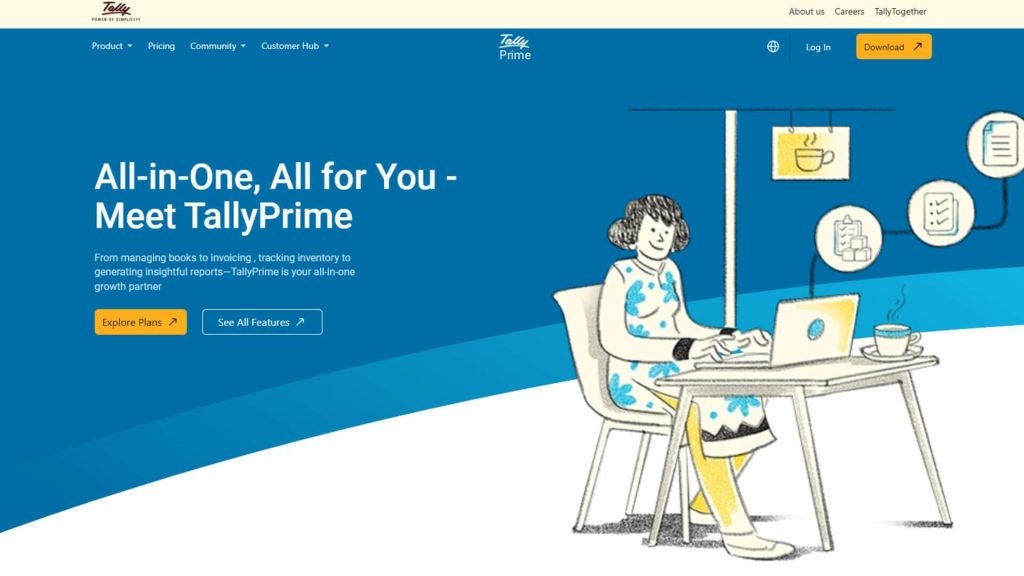
- Pros: It is the standard for local accounting and NBR compliance. It is also highly affordable and widely used.
- Cons: It lacks advanced manufacturing and production planning modules.
- Address: C/O Panache Solutions Pvt. Ltd., Building No. A82, 3rd Floor, Road No.2, Block – A, Niketan, Dhaka-1212
- Phone: +880 1313013031
2. bdtask (In-Factory ERP)
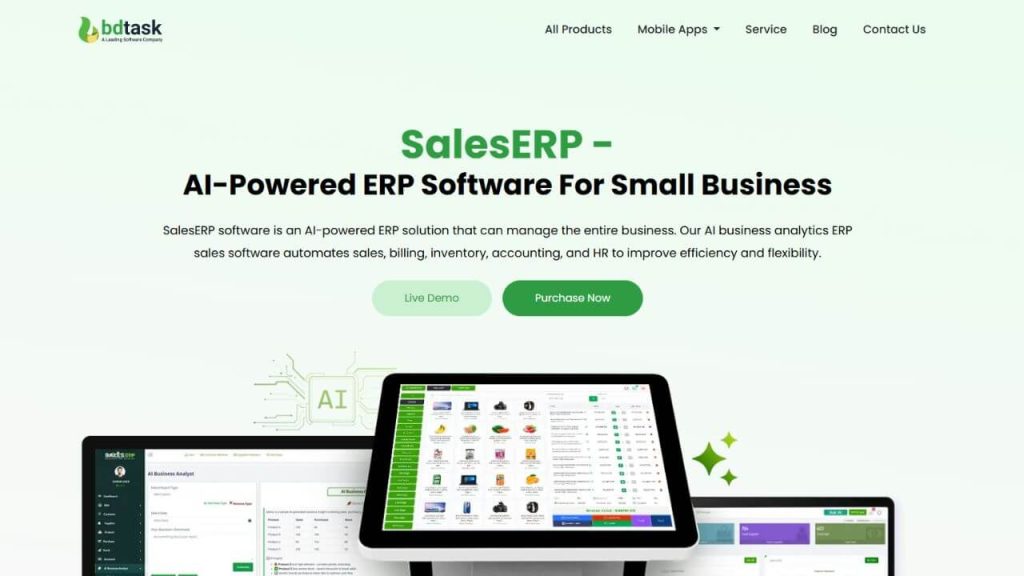
- Pros: An affordable, pre-packaged solution designed for quick, entry-level implementation.
- Cons: Its standardized structure allows for limited customization.
- Address: B-25, Mannan Plaza, 4th Floor, Khilkhet, Dhaka-1229, Bangladesh
- Phone: +8801817584639, +8801857675727
3. deshERP
- Pros: Features a simple, user-friendly interface created for local SME operations.
- Cons: It lacks advanced modules and is not built for high-volume scalability.
- Address: 19/A /1 (GF), Uttor Tolarbag, Answar Camp, Mirpur-1, Dhaka, Bangladesh.
- Phone: +8801708538190, +8801708538190
4. PinTechERP
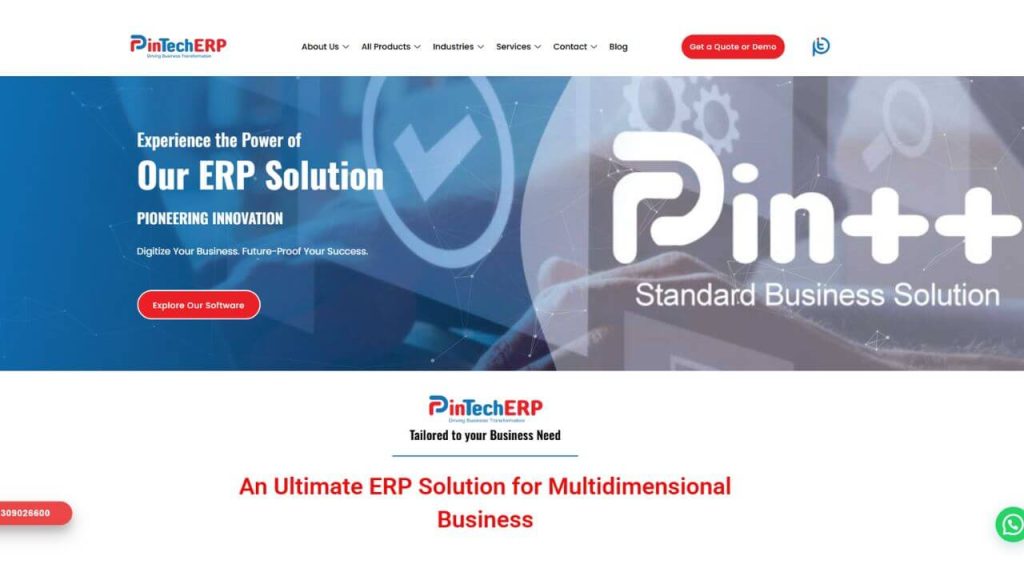
- Pros: A modern, cloud-based platform with a clean and intuitive user interface for SMEs.
- Cons: As a newer market entrant, it has a smaller client base and fewer public case studies.
- Address: 14/A Tejkunipara Rd, Dhaka 1215
- Phone: +8801309026600
5. Amar Solution
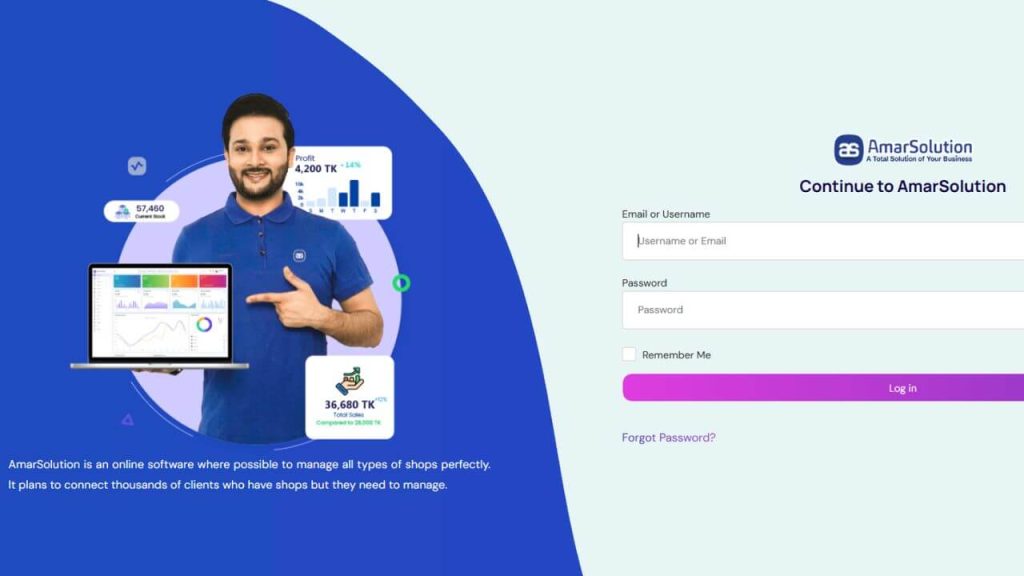
- Pros: Provides essential ERP functions needed to manage core, straightforward business operations.
- Cons: It is not designed to manage businesses with high operational complexity or rapid scaling needs.
- Address: House 51/C, Road 13/B, Sector 3 Uttara, Dhaka-1230, Bangladesh.
- Phone: +880174456931, +8801760807974
Feature Comparison: For Small Business ERPs
These ERPs provide an affordable way to control finances, manage basic operations, and ensure NBR compliance.
| Feature | TallyPrime | bdtask (In-Factory) | deshERP | PinTechERP | Amar Solution |
| Bill of Materials (BOM) | Basic | Basic | Basic | Basic | Basic |
| MRP Capabilities | Limited | Basic | Basic | Basic | Limited |
| Shop Floor Control | Basic | Basic | Basic | Basic | Basic |
| Customization Level | Low | Low | Low | Medium | Low |
| Local Compliance (NBR) | Excellent | Excellent | Excellent | Excellent | Excellent |
Top 5 Manufacturing ERPs for Large Businesses in Bangladesh
The top manufacturing ERPs for large companies in Bangladesh are provided by leading local vendors like Divine IT Limited (PrismERP), Pridesys IT (PrideERP), and Jibika Plexus.
1. Divine IT Limited (PrismERP)
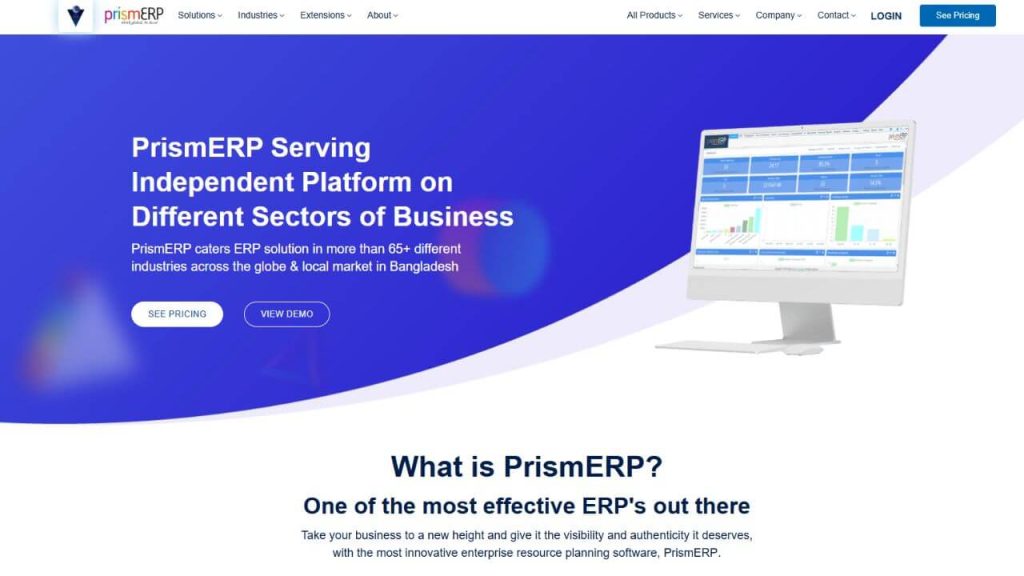
- Pros: A proven, leading local ERP for large enterprises with a comprehensive suite of modules.
- Cons: The pace of adopting cutting-edge global tech trends is slower than that of world leaders.
- Address: Road 12, Sector 10, Uttara Model Town, Dhaka 1230
- Phone: +8801730071010
2. Pridesys IT (PrideERP)
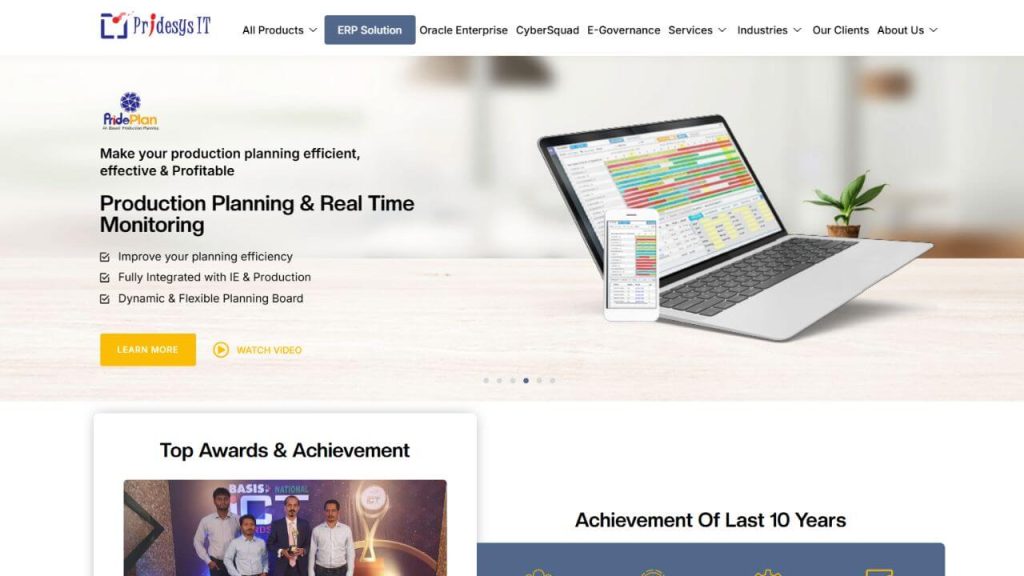
- Pros: Deep industry expertise, especially in garments. Delivers highly customized solutions.
- Cons: Extensive customization results in longer implementation timelines and higher costs.
- Address: Sumona Goni Trade Center, Plot- 2, Level 5 & 6, Panthapath, Kawran Bazar, Dhaka- 1215, Bangladesh.
- Phone: +8801550000003 – 4, 6 – 8
3. Jibika Plexus
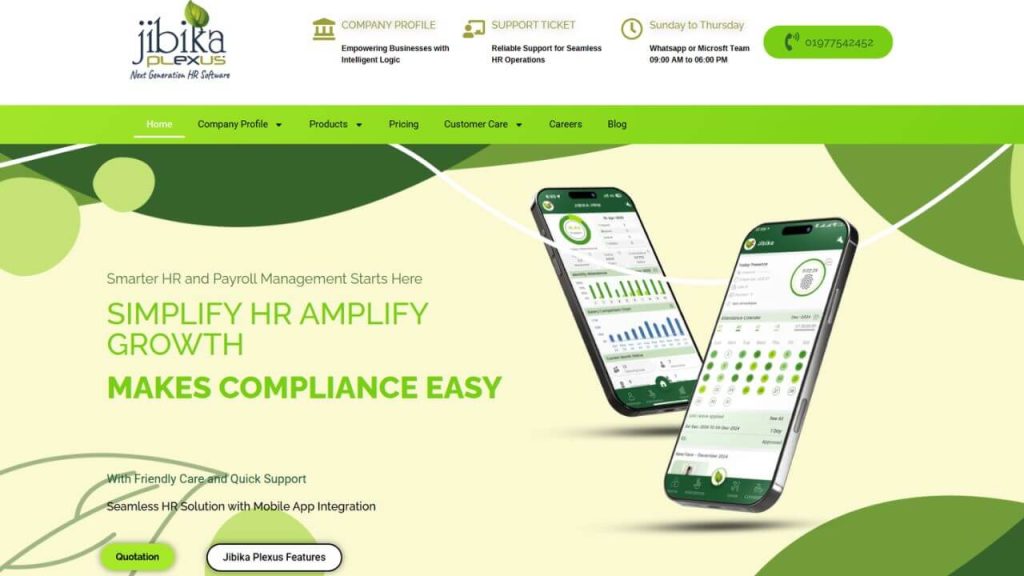
- Pros: A powerful, integrated solution for companies prioritizing Human Capital Management (HCM) with ERP.
- Cons: Its manufacturing modules are less specialized than those from a production-focused vendor.
- Address: Ka-48, Abdul Aziz Sarak, Jagannathpur, Vatara, Dhaka-1212
- Phone: +8801977542452
4. Smart Software Ltd (SmartERP)
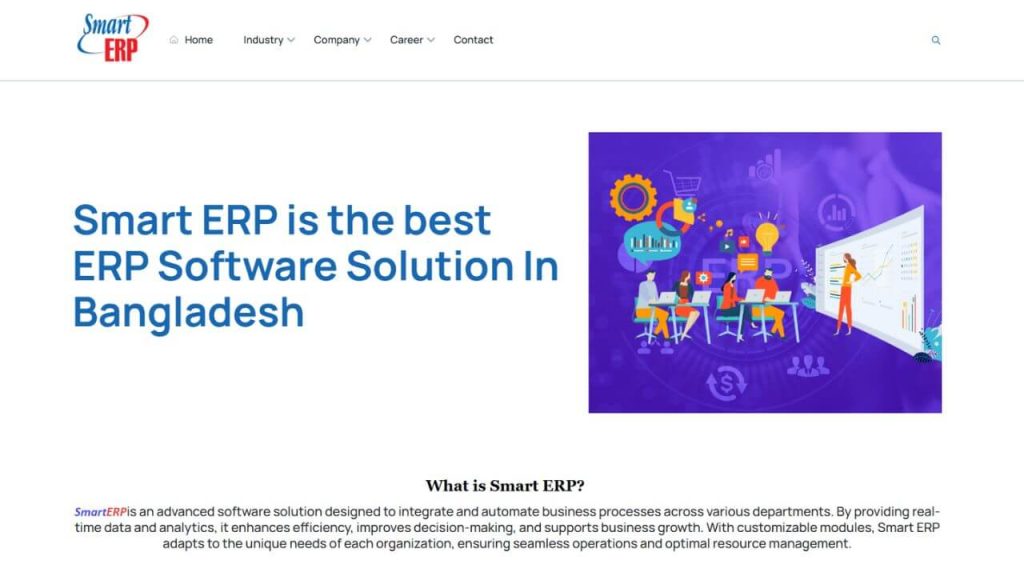
- Pros: An established vendor with a long history of successful implementations in major corporations.
- Cons: The user interface and underlying technology are less modern than newer cloud-native platforms.
- Address: 152/2/N (4th F), Panthapath, Dhaka, Bangladesh
- Phone: +8801844047000, +8801844047001
5. Roopokar ERP
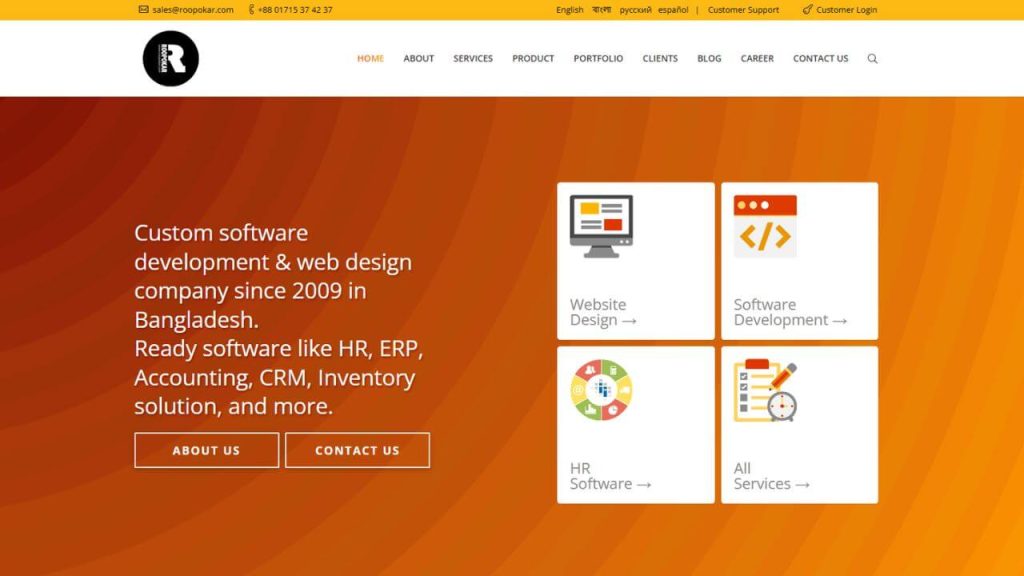
- Pros: Specializes in building bespoke ERPs tailored to the unique processes of large Bangladeshi businesses.
- Cons: Functions as a custom development project, not an off-the-shelf product, increasing project risk.
- Address: Plot 503, Road 05, Block A, Shagufta Housing, Dhaka 1216, Bangladesh
- Phone: +8801715374237
Feature Comparison: For Large Enterprise ERPs
These robust ERPs give large manufacturers the deep operational control needed to optimize production and drive strategic growth.
| Feature | PrismERP (Divine IT) | PrideERP (Pridesys IT) | SmartERP (Smart Software) | Jibika Plexus | Roopokar ERP |
| Bill of Materials (BOM) | Good, multi-level | Good, multi-level | Good, customizable | Good | Custom/Excellent |
| MRP II Capabilities | Good | Good | Good | Medium | Custom/Excellent |
| Shop Floor Control | Good | Good | Medium | Medium | Custom/Excellent |
| Garments-Specific Features | Very Good | Very Good | Good | No | Custom/Excellent |
| Local Compliance (NBR) | Excellent | Excellent | Excellent | Excellent | Excellent |
What Are The Best International Manufacturing ERPs?
SAP, Oracle, and Microsoft Dynamics 365 are among the best international ERP vendors, each with distinct strengths for manufacturing. Here is the best 5 list:
1. SAP
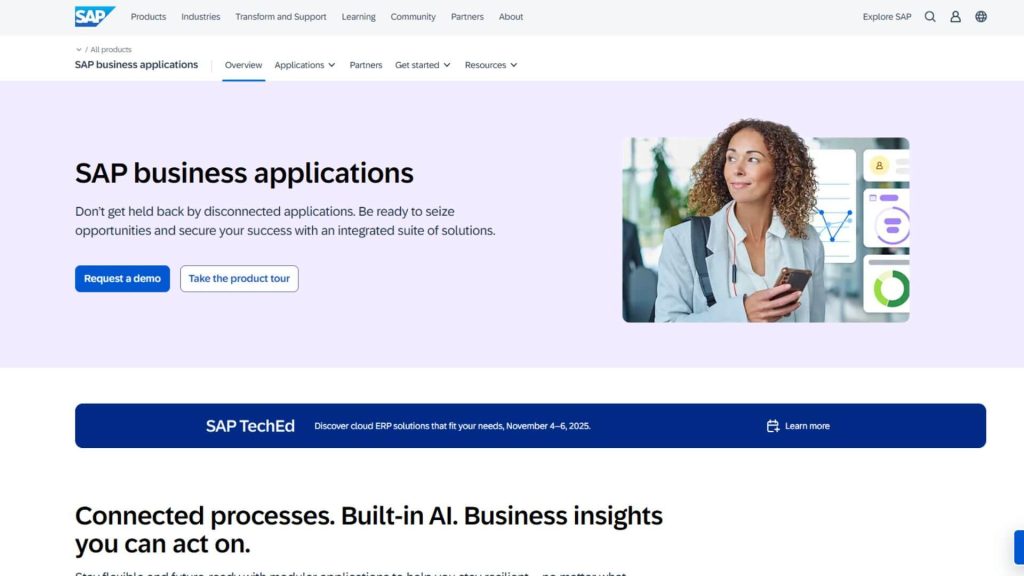
The market leader for large, global corporations with complex needs.
- Pros: Unmatched power and scalability, deep industry-specific features.
- Cons: Very high cost and extremely complex, lengthy implementation.
2. Oracle
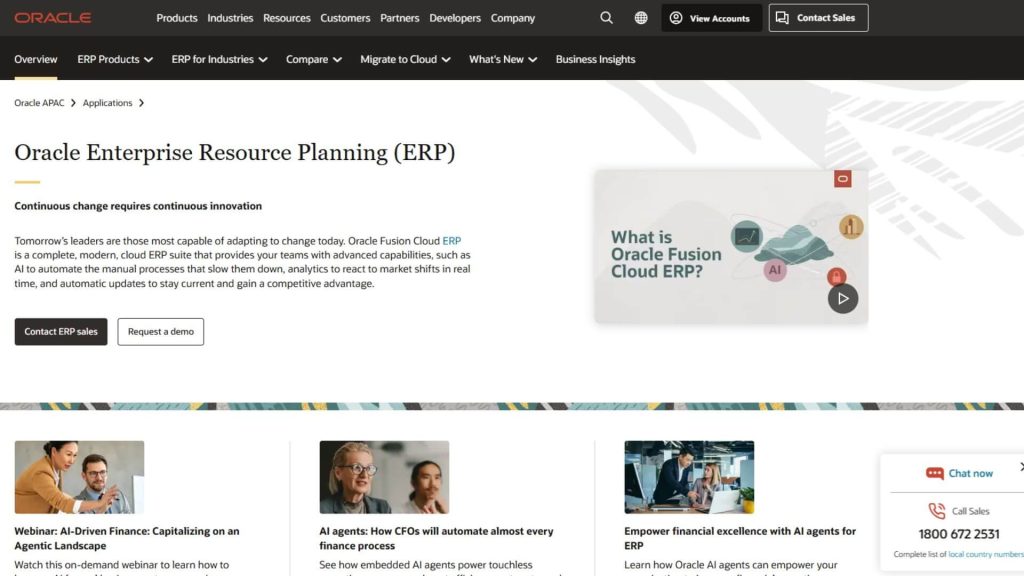
A top-tier competitor to SAP, offering powerful cloud (NetSuite, Fusion) and on-premise solutions.
- Pros: Excellent in finance and supply chain, flexible deployment options.
- Cons: High cost and complex licensing models.
3. Microsoft
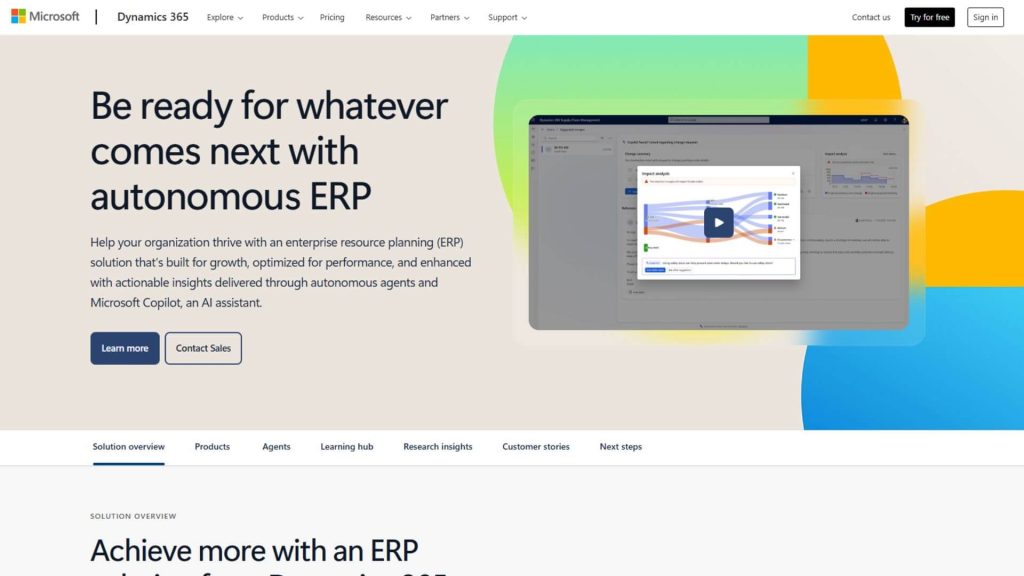
A major player with Dynamics 365, known for its deep integration with the Microsoft ecosystem.
- Pros: Familiar user interface; excellent integration with Office 365 and Power BI.
- Cons: Success heavily depends on the implementation partner; less niche-specific out of the box.
4. Infor
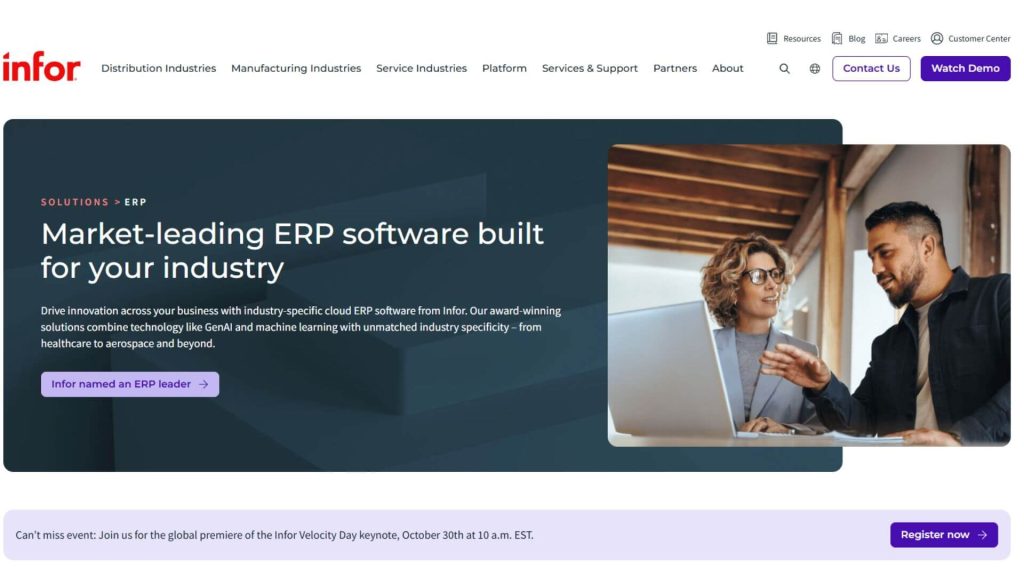
A specialist focused on providing deep, industry-specific solutions that require less customization.
- Pros: Pre-configured for industries like garments or food; modern and user-friendly.
- Cons: Less brand recognition and a smaller global partner network.
5. Epicor
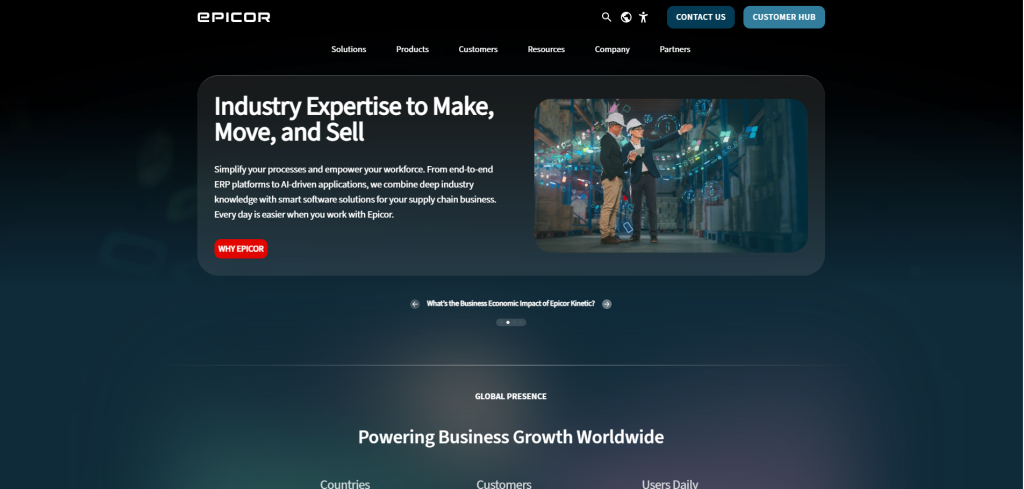
A strong vendor focused specifically on mid-market manufacturers.
- Cons: Non-manufacturing modules (like HR) are less robust than competitors.
- Pros: Excellent control over the factory floor (shop floor management); highly flexible.
How To Choose The Right ERP System?
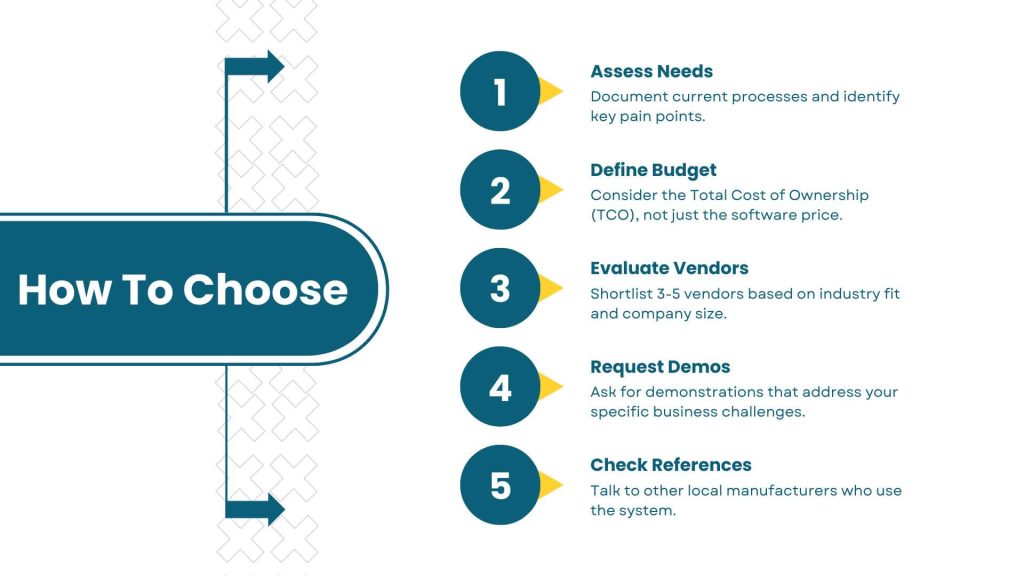
Choosing the right ERP requires a structured evaluation of your business needs, budget, and vendor capabilities.
- Assess Needs: Document current processes and identify key pain points.
- Define Budget: Consider the Total Cost of Ownership (TCO), not just the software price.
- Evaluate Vendors: Shortlist 3-5 vendors based on industry fit and company size.
- Request Demos: Ask for demonstrations that address your specific business challenges.
- Check References: Talk to other local manufacturers who use the system.
What Are The Key Steps for Successful ERP Implementation?
- Discovery & Planning: Form a project team and define the scope.
- Design & Configuration: Map business processes to the ERP system.
- Data Migration: Cleanse and transfer master data.
- Testing: Rigorously test the system to find and fix issues.
- Training: Train all end-users on their specific roles.
- Go-Live: Launch the new system.
- Post-Go-Live Support: Provide ongoing support to resolve issues.
How Long Does ERP Implementation Take?
Implementation can take from 3-9 months for small businesses and 12-24+ months for large enterprises, depending on complexity.
What is The Difference Between Manufacturing MRP and Generic ERP?
While a generic ERP handles standard business functions, a manufacturing ERP contains specialized modules for production. These include BOM, shop floor control, and quality management, which are not present in a generic system.
What is The Difference Between MRP and ERP?
MRP and ERP are related, but they cover different areas of a business. Think of it as a series of steps.
- MRP (Material Requirements Planning) was the original system. It focused only on one thing: planning the raw materials needed for production.
- MRP II (Manufacturing Resource Planning) was the next step. It included all of MRP’s material planning, but added planning for the factory’s capacity, like machines and people.
- ERP (Enterprise Resource Planning) is the final, complete system. It includes everything from MRP II and also connects all other business departments, like finance, sales, and human resources, into a single platform.
Conclusion
This guide has detailed manufacturing ERP systems for businesses in Bangladesh, covering top local and international vendors. A well-chosen ERP is a strategic asset that drives efficiency, provides critical visibility, and builds a foundation for sustainable growth in a competitive landscape.